
Cast iron
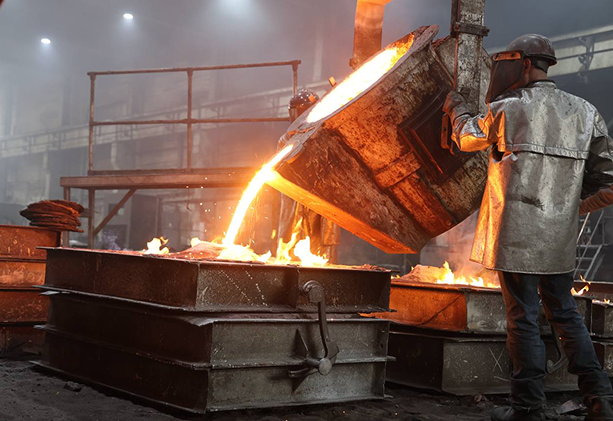
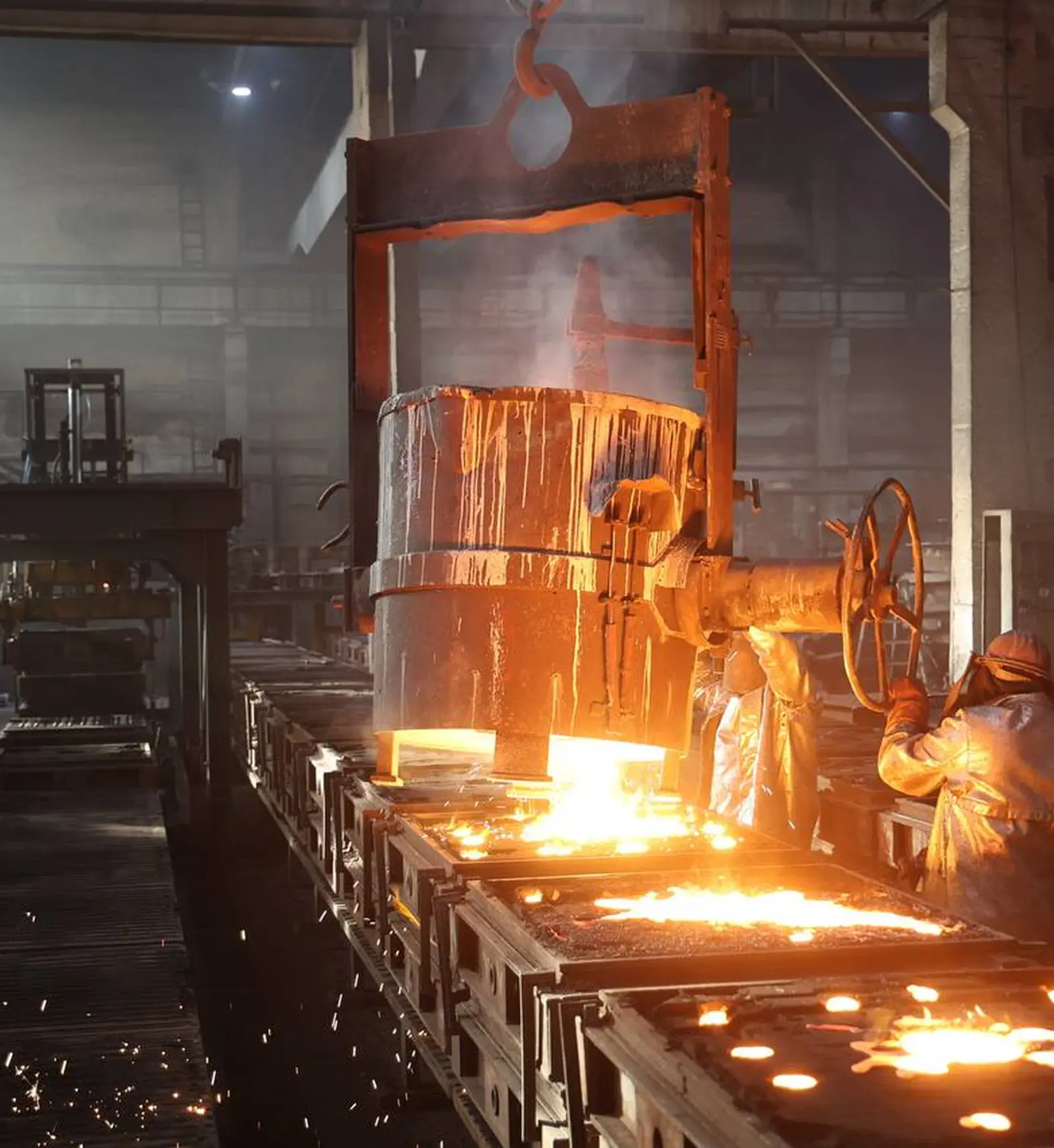
Cast iron casting is a popular solution for manufacturing robust, wear-resistant, and easily machinable components for various industrial sectors. We manufacture cast iron castings, housing parts, blanks, and other cast iron products to order, based on drawings, technical specifications, or samples.
The appropriate grade of cast iron is selected based on the operating conditions and requirements for the component. If necessary, the finished parts can undergo additional machining to ensure that dimensions, mating surfaces, and working areas meet the technical requirements of the project.
Types of Cast Iron for Casting
Various types of cast iron are used to manufacture custom castings and components—depending on the requirements for strength, wear resistance, impact resistance, and actual operating conditions.
The appropriate material is selected for each application to ensure that the finished component possesses the necessary properties and performs reliably in service. This allows for the targeted production of both simple cast iron products and castings subjected to higher loads, specifically for mechanical engineering, infrastructure, municipal facilities, or other industrial sectors.
-

Gray cast iron
One of the most commonly used materials for casting. Suitable for components where good machinability, wear resistance, vibration damping, and cost-effective production are important.
-
Molded Cast Iron
Used for components that must withstand varying loads and exhibit greater ductility than standard cast iron castings. Suitable for mechanical engineering and critical assemblies.
-
High-Strength Cast Iron (GGG)
Suitable for the manufacture of components that require increased strength, reliability, and resistance to mechanical stress. This material is often chosen for cast iron products that are subjected to heavy loads and require a long service life.
-
Ductile iron
Used for castings where a combination of strength, wear resistance, and stable operational characteristics is important. Suitable for components that operate under demanding industrial conditions.
Advantages of Custom Cast Iron Castings
-

Operational Strength
Cast iron is used for components that operate under load and must reliably retain their shape during operation. For this reason, it is often chosen for housing parts, supports, plates, and other industrial cast iron castings.
-
Good casting properties
Cast iron casting allows for the production of components in various shapes and sizes without unnecessarily complicating the design. This is particularly useful when castings based on drawings or cast iron products for a specific technical application are required.
-
Suitable for further processing
After casting, the blank can be machined and adjusted to the required specifications. This allows cast iron parts to be used as the basis for finished components and assemblies.
Who is cast iron suitable for?
Mechanical Engineering
Cast and machined cast iron parts for machinery and equipment: housings, machine beds, pump housings, gearboxes, plates, and other components for industrial assemblies.
Mining Industry
Cast iron castings and components for crushers, mills, conveyor systems, excavators, and other heavy equipment where strength and wear resistance are critical.
Rail Transportation
Cast iron products and cast components for rail transportation: components for railcars, bogies, braking systems, switches, track systems, and auxiliary structures.
Metallurgy
Cast iron castings for metallurgical plants: furnace components, grates, plates, housing elements, and other components used under demanding production conditions.
Construction and Infrastructure
Cast and structural components for construction and infrastructure projects: support elements, foundation components, gratings, manhole covers, stairs, covers, and auxiliary structural components.
Energy Facilities
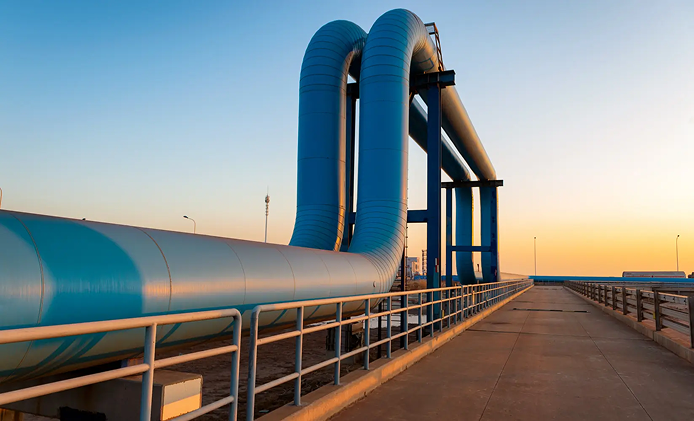
Cast housings, flanges, valve components, pump housings, and other cast iron parts for pumping stations, thermal power plants, and other energy systems.
Customized Material Selection for Cast Iron Castings
Not every type of cast iron is suitable for every component. The material is selected based on the load, operating conditions, and requirements for strength, wear resistance, and subsequent machining.
This allows for a suitable solution to be determined for each project—rather than using a generic material that does not take the component’s specific characteristics into account.
About Us in Numbers
-
20 + Hectares
Total production area
-
1000 + metric tons
Castings per month — Group's total capacity
-
30 + Partner
From countries in the EU, the Balkans, and Eastern Europe

How to Order Cast Iron Castings Based on a Drawing
-
We determine which castings or components are to be manufactured, in what quantities, and according to what specifications.
-
We review drawings, a sample, or the technical specifications to understand the component’s parameters and its operating conditions.
-
We determine which type of cast iron is best suited for the specific component, the load, and further processing.
-
We perform the cast iron casting process, taking into account the component’s geometry, quality requirements, and the specific characteristics of the production process.
-
If necessary, additional processing is performed. The finished parts are then prepared for shipment to the customer.
Advantages of the Cast Iron Foundry
-
Complete production cycle
From model production to the finished machined component.
-

State-of-the-art technical equipment
Automatic molding lines, 3- and 5-axis CNC machines, and a state-of-the-art laboratory.
-

Multi-stage quality control
Chemical analysis, ultrasonic testing, spectral analysis, 3D scanning, metallography, and mechanical testing.
-

Wide Range of Materials
Gray cast iron, malleable cast iron, and high-strength cast iron, as well as materials for various operating conditions and component requirements.
-

Flexible Production
Small-batch, medium-batch, and mass production.
Frequently Asked Questions about Cast Iron Parts
Yes. If machinability, vibration damping properties, and the predictable behavior of the part during operation are the top priorities for a project, a grey iron foundry is generally considered the suitable format for such tasks. This is particularly relevant for housing elements, base plates, covers, machine beds, and other items where manufacturability is just as important as tensile strength.
Yes. If the project necessitates prepared datum surfaces, drilled holes, seating fits, or other functional zones, the machining of castings is coordinated in advance. This is convenient when the customer requires a part with a specific degree of readiness for immediate assembly or installation, rather than just a rough blank.
Yes. In such projects, cast rings can be put into production if the shape, geometric stability, and the capability for further precision machining are critical to the task. This format is highly suitable for seating, supporting, and auxiliary components that will subsequently operate as integral parts of a larger mechanical assembly.
In this scenario, it is logical to calculate the part specifically for its actual operating conditions from the outset, rather than simply replicating the old geometry with the same material. If the assembly is subjected to friction, abrasive loads, or continuous contact with an aggressive working medium, wear-resistant casting can be incorporated into the project to ensure the new part delivers a longer service life and reduces the frequency of replacements.
Fill out the form to schedule a consultation
Custom Manufacturing of Cast Iron Parts
When a part must maintain its shape, reliably withstand loads, and avoid the high costs of a complex steel assembly, cast iron is most frequently chosen. For industry, this is not a “simplified material,” but a functional solution for specific tasks: housing elements, bases, covers, manholes, rings, supports, and parts that subsequently undergo assembly or machining. It is precisely with such orders that the Western Foundry Group, which includes Promlit Plant LLC and Gorstal Plant LLC, operates.
Both serial items and one-off parts for the repair or replacement of an assembly are accepted for production. If the customer has a drawing, the calculation proceeds faster. If the documentation is lost, a physical sample can be submitted for production, from which the geometry is reverse-engineered and the appropriate material is selected. This format is highly convenient when you need not to search for a “similar product,” but to quickly launch the exact required item into production with clear dimensions and a standard service life.
What Parts Are Ordered Most Frequently
In practice, cast iron castings are in demand across a wide variety of sectors: from municipal utilities to mechanical engineering. Customers order not only large casing elements but also highly functional items where dimensional repeatability, load resistance, and the suitability for post-casting machining are critical.
The items most frequently submitted for production include:
- Pump and gearbox housings;
- Covers, flanges, and base plates;
- Manholes, frames, and grates;
- Machine beds and bases;
- Rings, seating components, and auxiliary elements;
- Blanks (workpieces) for further machining.
A distinct category of orders involves sewerage castings. Here, seating dimensions, product mass, operational durability, and batch consistency are especially critical. For municipal and road infrastructure projects, a cast iron manhole (well cover) is also regularly required, where the objective is to obtain not merely a heavy component, but a product with the correct geometry, proper seating fit, and a clearly defined load class rating.
Which Cast Iron is Selected for Different Tasks
Making a mistake at the material selection stage is very easy. Externally, two parts may look identical, but in operation, one functions reliably for years, while the other begins to crack, warp, or wear out quickly. Therefore, the material grade is selected not as a formality, but based on exactly how the assembly will operate in the field.
If excellent machinability, stable shape, and superior vibration damping are required, grey cast iron foundry production is most often the suitable choice. This is a pragmatic option for housing parts, plates, covers, and bases, where manufacturability and an adequate cost-efficiency ratio are important.
If the operational load is higher and a greater structural safety margin is expected from the part, ductile iron casting is typically specified in the project. Such material is more frequently selected for heavily loaded housings, load-bearing elements, and parts that operate under severe conditions.
For certain orders, malleable/ductile iron is also appropriate when more reliable performance under variable dynamic loads is needed, without risking the part’s service life during actual operation.
To simplify the selection process, the baseline logic can be summarized as follows:
| Task Type DOCX | What is Typically Selected DOCX |
| Housing and machine parts
|
Grey cast iron |
| Loaded assemblies
|
Ductile iron |
| Municipal elements
|
Grey or ductile iron depending on the load class |
| Wear parts
|
Special wear-resistant grades |
What is Important Before Launching an Order
To prevent the estimation process from dragging on, it is best to provide the maximum amount of initial data upfront:
- A drawing or sketch;
- A sample of the part;
- Dimensions and mass;
- Operating conditions;
- Whether mechanical machining is required;
- Desired manufacturing lead time.
In essence, proper cast iron production begins not with the melting process, but with a correct formulation of the technical task. When the geometry, load requirements, and part specifications are clear, it is much easier to select the correct alloy grade, calculate the cost, and immediately launch the order without unnecessary rework.